Quality that drifts
Ask how the scope, inspection points and feedback process will be recorded. A written reference makes it easier to see whether expectations have changed.
Read the office guideTwin Cities buyer guide
A commercial-cleaning decision is easier when the building, priorities, access and schedule are described clearly. Use this guide to compare conversations, prepare questions and make the next call more useful.
Call to discuss your cleaning scope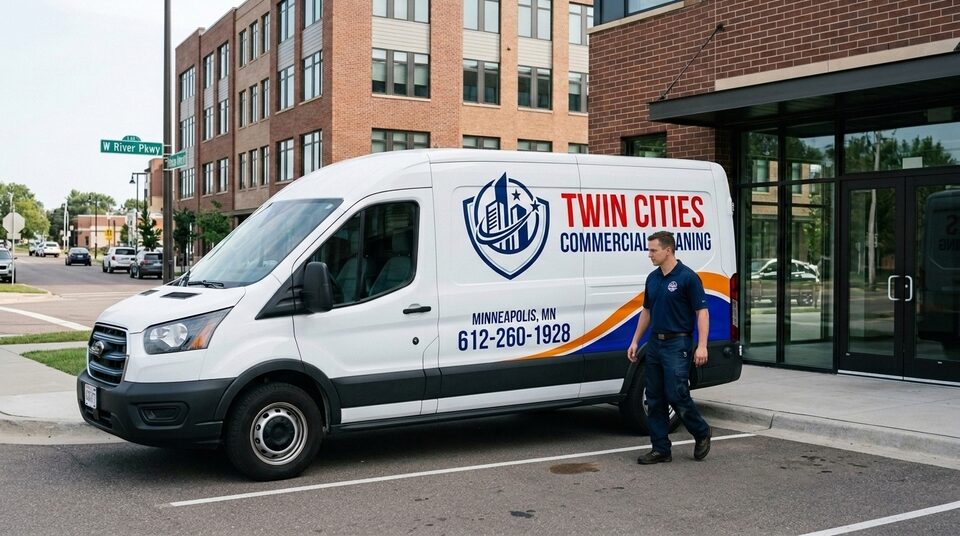
Six questions worth asking
The most common concerns are usually not about a label such as “office cleaning.” They are about what will be covered, when it happens and how changes are handled. These prompts are neutral planning guidance for comparing any proposal.
Ask how the scope, inspection points and feedback process will be recorded. A written reference makes it easier to see whether expectations have changed.
Read the office guideList the touchpoints that matter in your building: handles, switches, shared equipment and restroom fixtures. Confirm where they belong in the scope.
Review scope questionsAsk who owns day-to-day questions, what happens when staffing changes and how building-specific notes are carried forward.
See what to askDescribe occupancy patterns, meeting times, delivery windows and noise-sensitive areas before discussing a proposed schedule.
Plan around operationsSeparate routine work, periodic work and exclusions. A short written list reduces the chance that a request becomes an argument later.
Prepare a quote briefAsk about access, key handling, site rules and the route for escalating concerns. Share sensitive site detail only when appropriate.
Start with a callA short comparison brief gives each provider the same starting point: building type, approximate footprint, priority spaces, desired timing, access boundaries and anything that has caused friction before. It does not need to prescribe the answer. It simply makes the questions consistent, so one response is not judged against a different set of assumptions from another.
During each call, note what is confirmed, what needs a site-specific answer and what would change the proposed work. If a proposal uses broad wording, ask for the rooms, tasks, frequency and exclusions to be named. That record is useful for a facilities contact, an office manager and a budget approver because it keeps the decision tied to the same operational detail.
Find the right questions
The guides below are planning resources, not statements of service availability or coverage. They help you make the facility type and local decision context explicit before you compare providers.
Compare priorities for offices, healthcare settings, retail spaces, restaurants, education, industrial facilities and more.
Use city-specific buyer guides for Minneapolis, St. Paul, Woodbury, Lakeville, Plymouth, Blaine and other listed locations.
Explore scope questions for floor care, deep cleaning, window and glass, post-construction and specialist work.
Read local context and general commercial-cleaning considerations with sources kept separate from business claims.
The practical checklist
Before you agree to a proposal, ask for enough detail that another person at your organisation could understand the work, the boundaries and the next step. This is a buyer-protection checklist, not a promise about any specific arrangement.
Call to talk through your scopeA clear scope does not need to be complicated. It needs to show what is known, what is still to be confirmed and which changes need separate agreement. Keep a copy of the brief beside each proposal so you can compare like with like rather than comparing only a headline figure.
Before approving anything, ask whether the document would still make sense to a colleague who was not on the call. If the answer is no, the next step is usually clarification: identify the missing room, timing assumption, access rule or price condition and have it written down. This is not about making the process slower; it is about preventing a preventable mismatch once the work is expected to begin.
When two documents describe the same building differently, the difference is usually in what each one leaves unsaid. Set them beside each other and mark where they diverge: the rooms named, the tasks listed under each room, how often each task recurs, who supplies consumables, and what counts as an additional request. Wording matters more than length here, because a short list that names every space can be clearer than a long one written in general categories.
It also helps to write down the assumptions you brought to the conversation, not only the answers you received. If you were picturing evening work, shared restrooms on a multi-tenant floor, or a seasonal change in footfall, record that beside the proposal. Assumptions left unstated are the ones that surface later as disagreements, and they are straightforward to resolve while the decision is still open.
Telephone-first contact
Twin Cities Commercial Cleaning can be reached at (612) 260-1928, 24/7. Call to discuss the facility, your scope and the schedule you need to clarify. Services, coverage and arrangements can be confirmed directly.